
MASTERBATCH
MASTERBATCH CARRIERS FOR DIFFERENT POLYMERS
- UN - MB for universal use (except PC)
- SL - MB for general-purpose (crystal) and high-impact polystyrene (PS)
- SA - MB for styrene-acrylonitrile (SAN), acrylonitrile-butadiene-styrene (ABS) and polycarbonate (PC)
- PA - MB for filled and unfilled polyamides (PA, nylon)
- PVC - MB for plasticised and rigid PVC
- CA - MB for cellulose acetate (CA)
- PSO - MB for polysulfones
- EVA - MB for ethylene-vinyl acetate (EVA)
- MM - MB for polymethyl methacrylate (PMMA)
- PU - MB for various polyurethanes (TPU)
- PAC - MB for polyacetal (POM)
- TR - MB for thermoplastic rubber
- PBT - MB for polybutylene terephthalate
- PES - MB for polyesters
- PEEK - MB for polyether ether ketone (PEEK)
SPECIAL-PURPOSE MASTERBATCHES
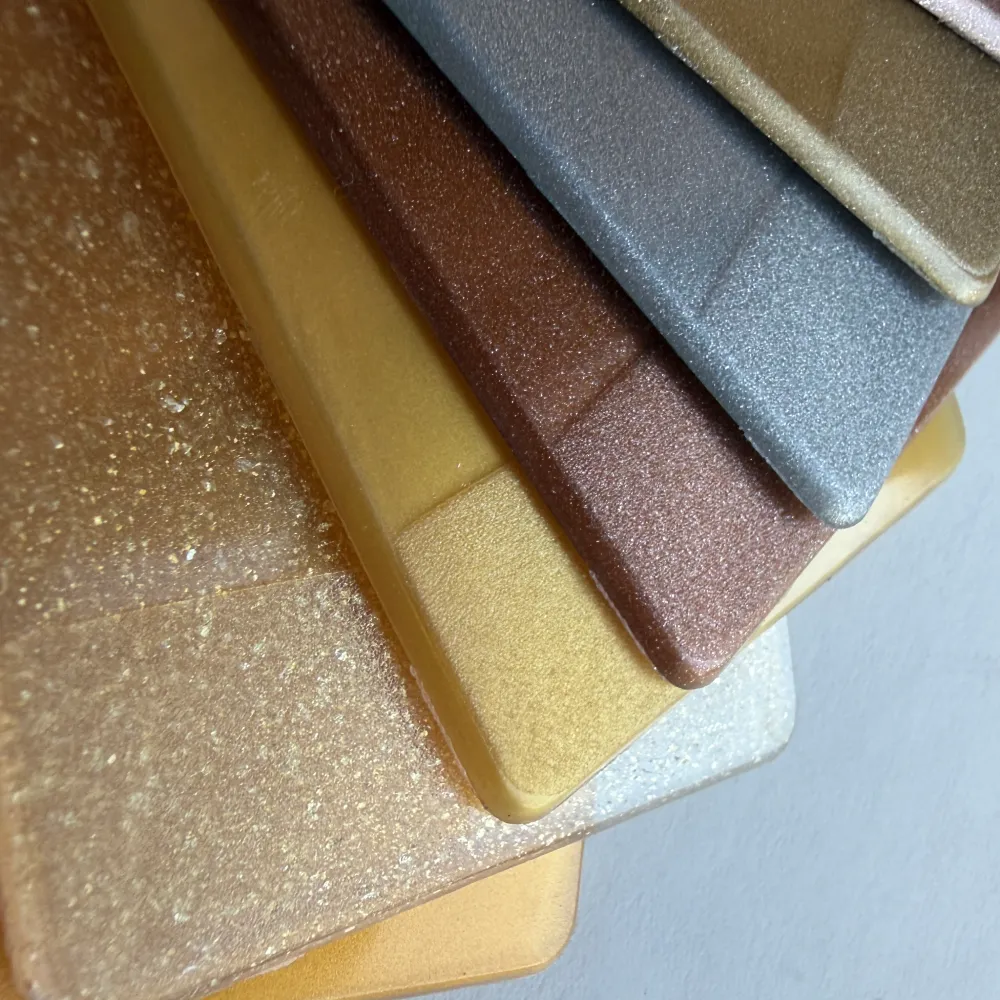
- ES - special-effect masterbatches (pearlescent, metallic, glitter, photoluminescent, fluorescent)
- KR - transparent masterbatch
- ATS - non-toxic masterbatches
Products and custom solutions for every application
Our range includes 7 different types of masterbatch, refined over time through customer feedback and our own laboratory research.
DIFFERENT PARTICLE SIZES
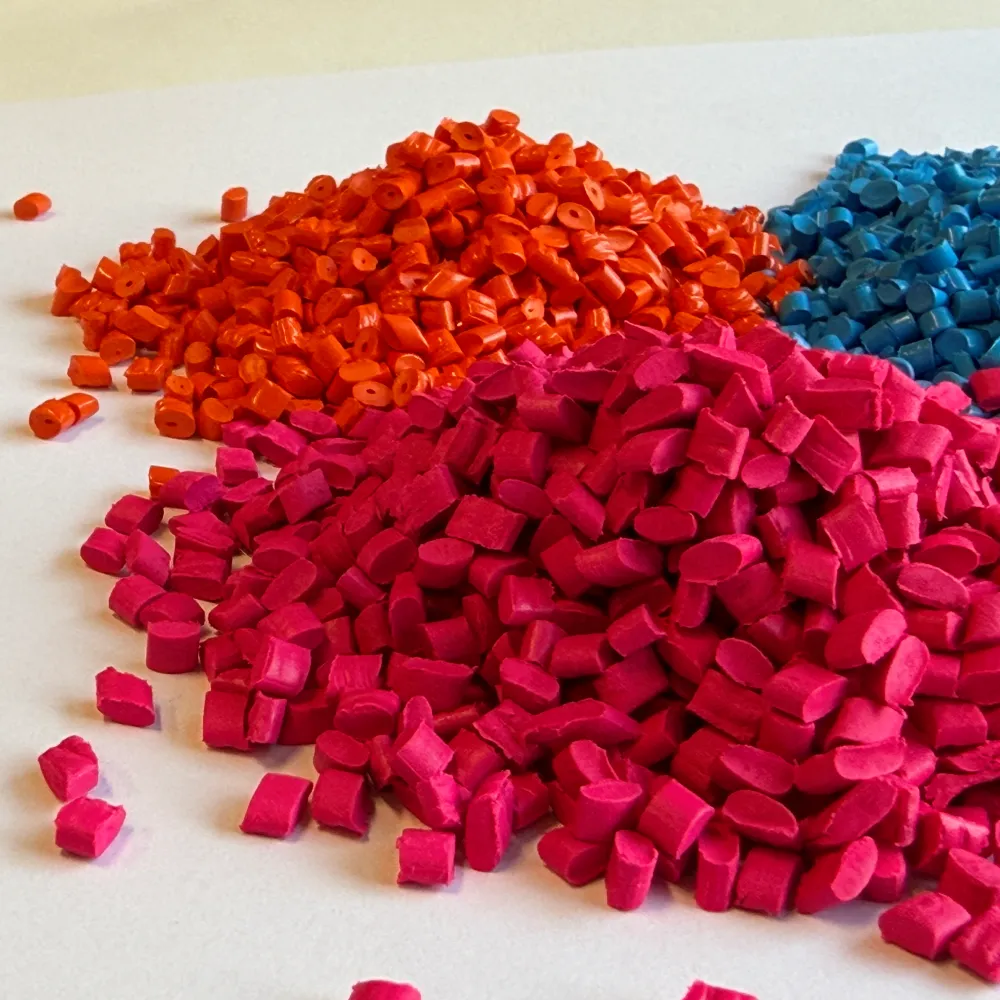
GRT
Pelletised masterbatch. It ranges from the classic pellet, in various diameters and sizes, to lenticular pellets that improve initial dispersion.
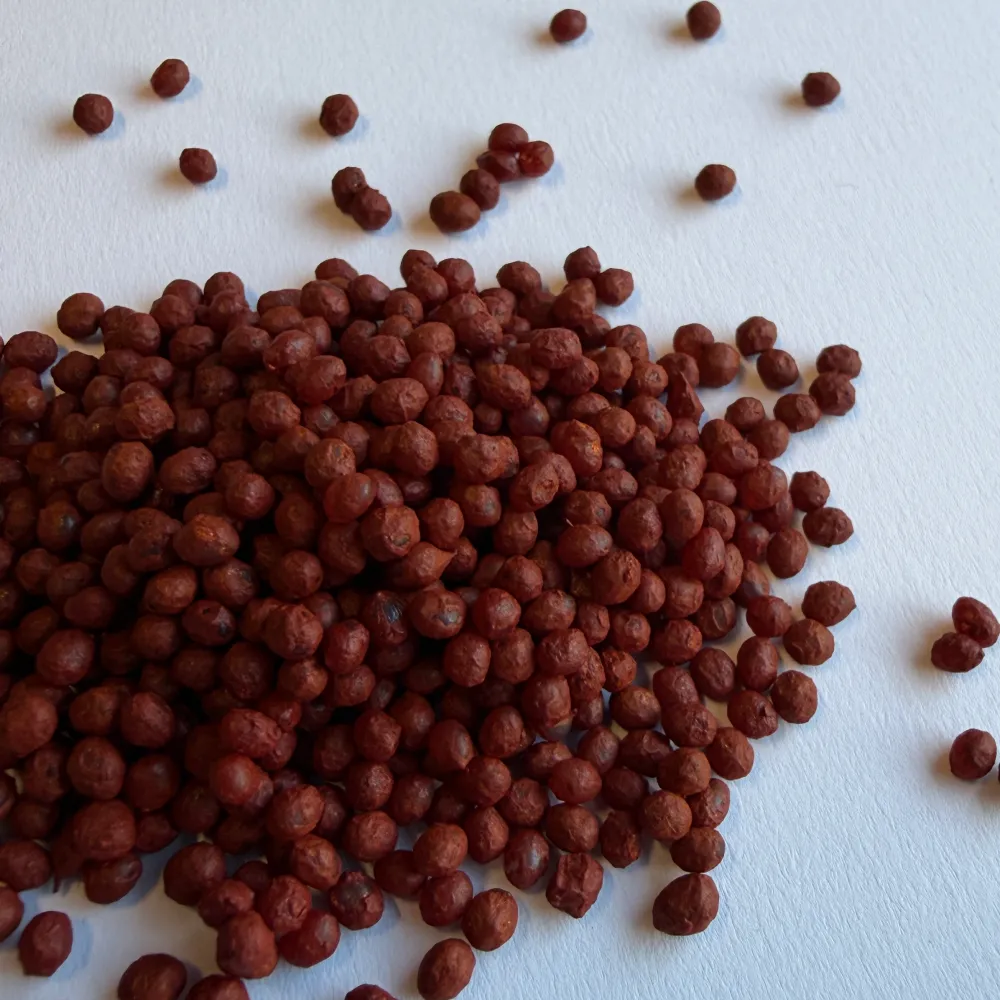
GR
Can be built on any thermoplastic resin and offers excellent initial dispersion. It works very well with blends fed straight into the hopper, but we don't recommend it with volumetric dosing units.
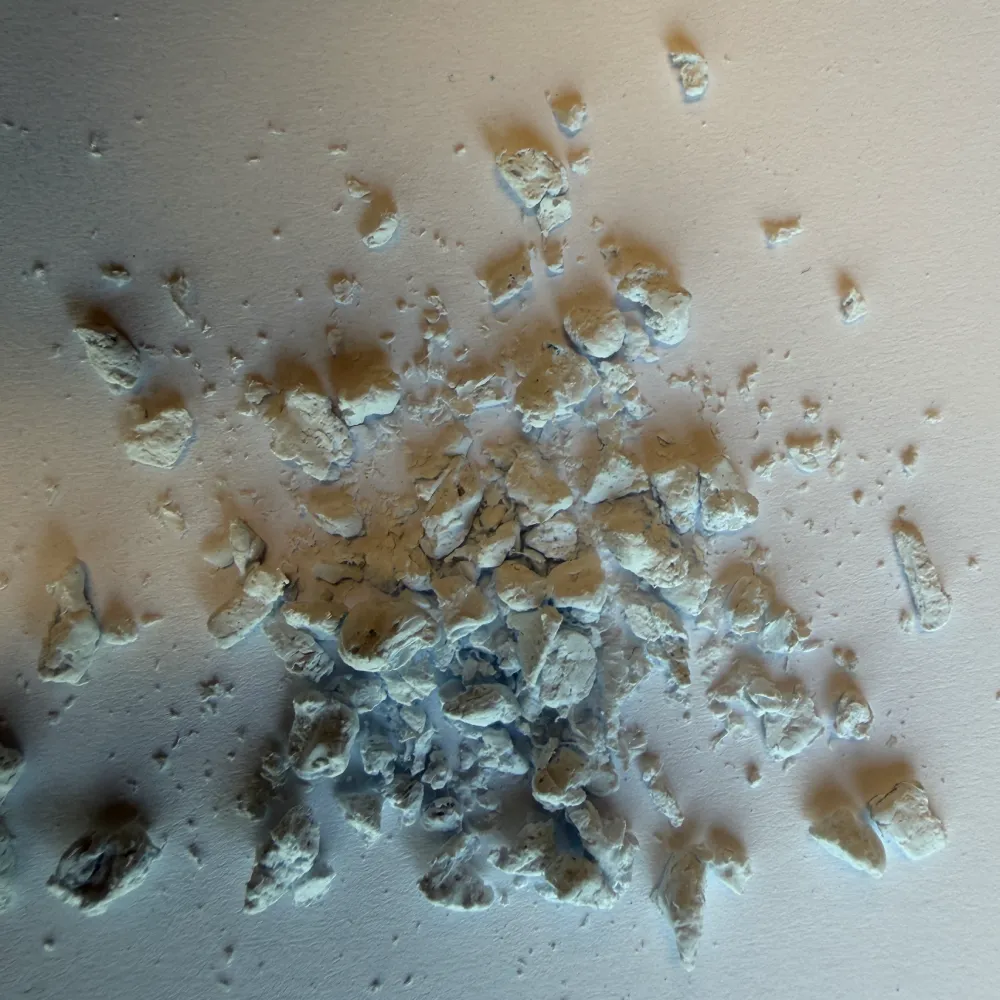
MC
Solid masterbatch made by grinding. It helps when blend consistency becomes a problem, particularly when pelletised masterbatch tends to separate out because of its small size and high specific gravity compared with the polymer. Strong machine vibration makes this more likely.
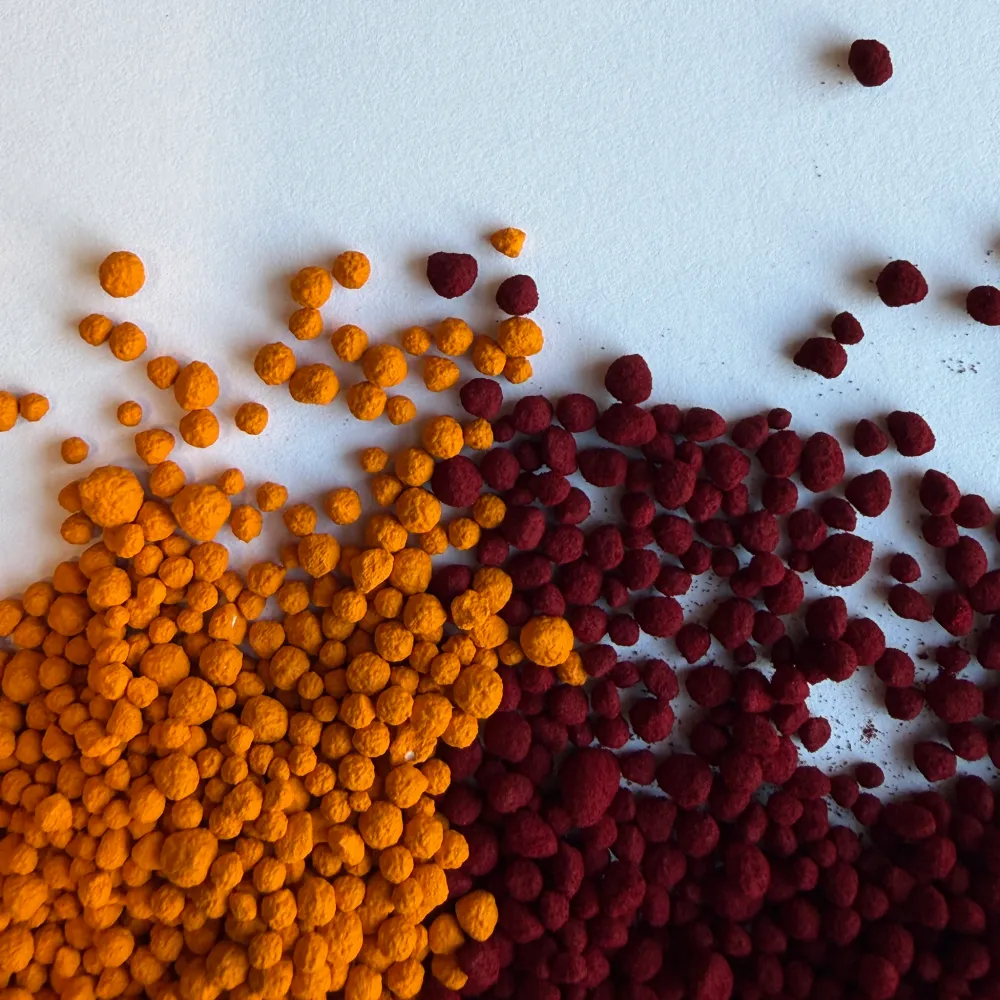
PL
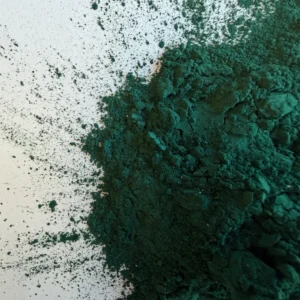
Solid masterbatch in powder form. The very fine particle size gives maximum initial dispersion and distribution. A puff of compressed air removes it, which makes it ideal for rotational moulding. Very high colour concentration.
SP
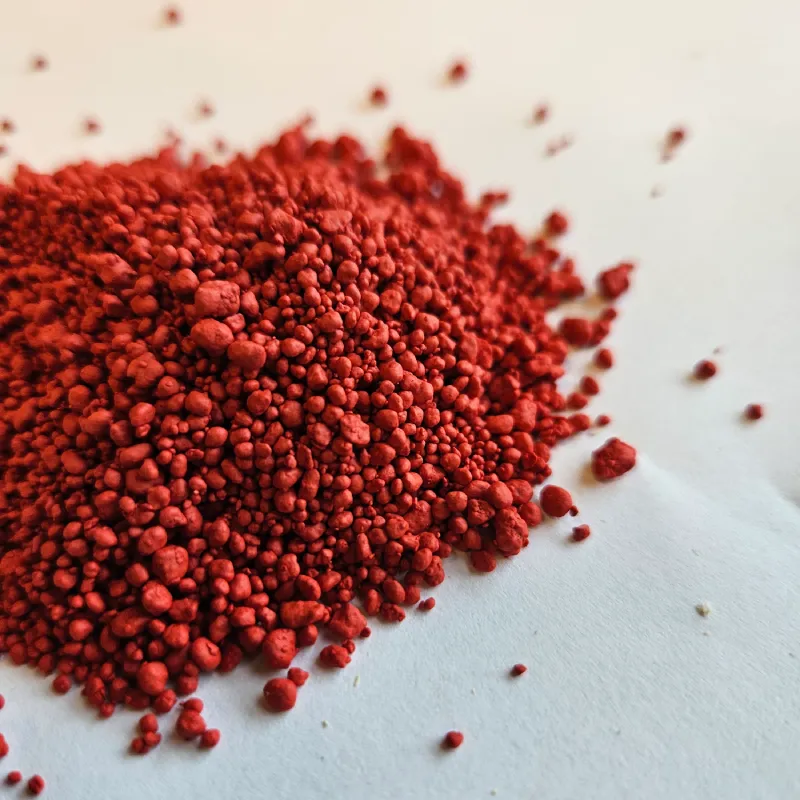
Solid spheroidal masterbatch with a soft consistency (very high viscosity) and excellent dispersion. It behaves like a paste, coating the surrounding pellets and bonding to them permanently. No airborne dust.
MSF AND COLOUR MATCHING
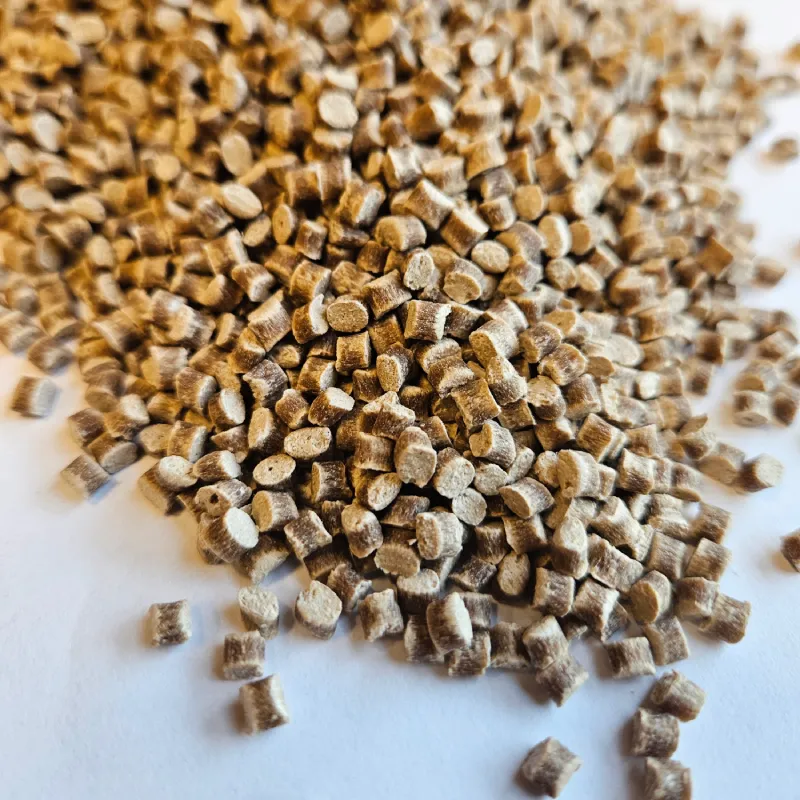
Of all our masterbatch types, the MSF microsphere is, in our view, one of the most interesting.
Its particle size is comparable to sand, and it flows extremely well.
It is completely dust-free.
With no greasy components, it cleans off with a single puff of compressed air.
Its small size gives it maximum initial pre-dispersion. At the same weight and let-down ratio, it disperses dozens of micro-pellets rather than a single pellet. Cycle times get faster too.
Applications
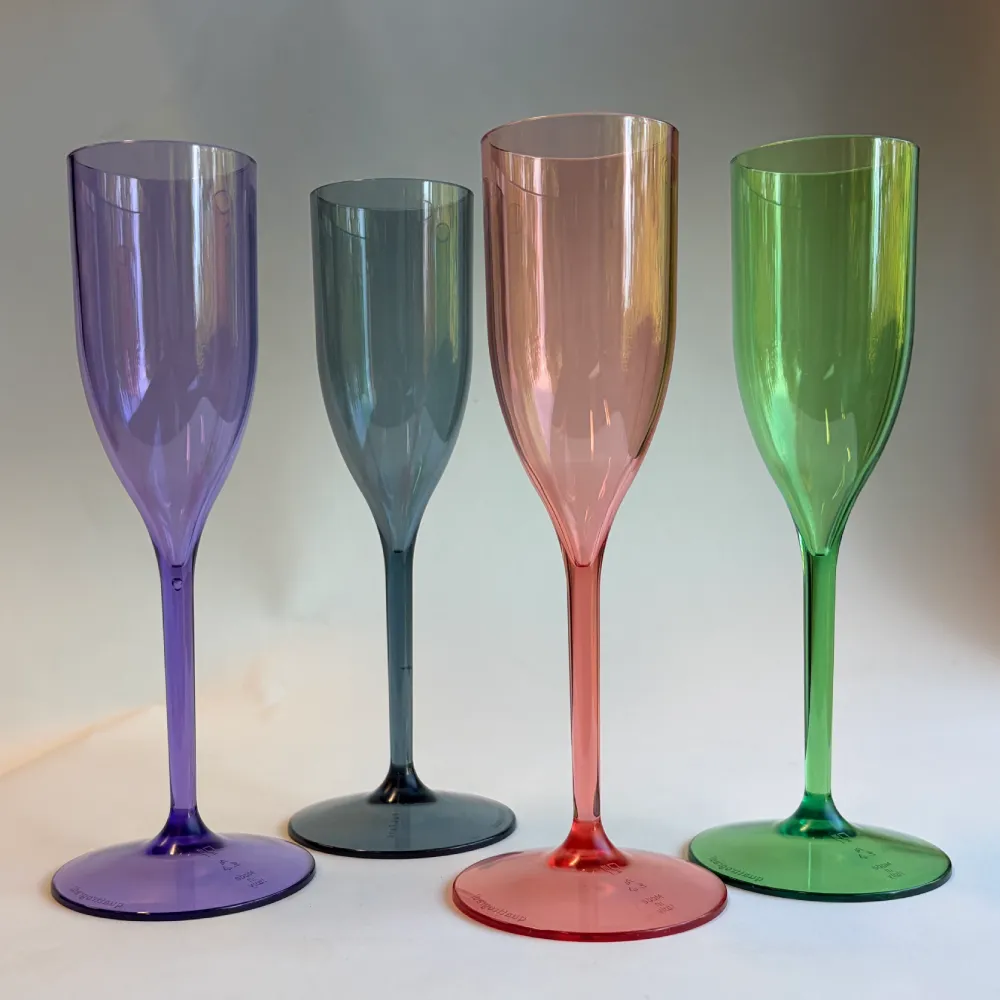
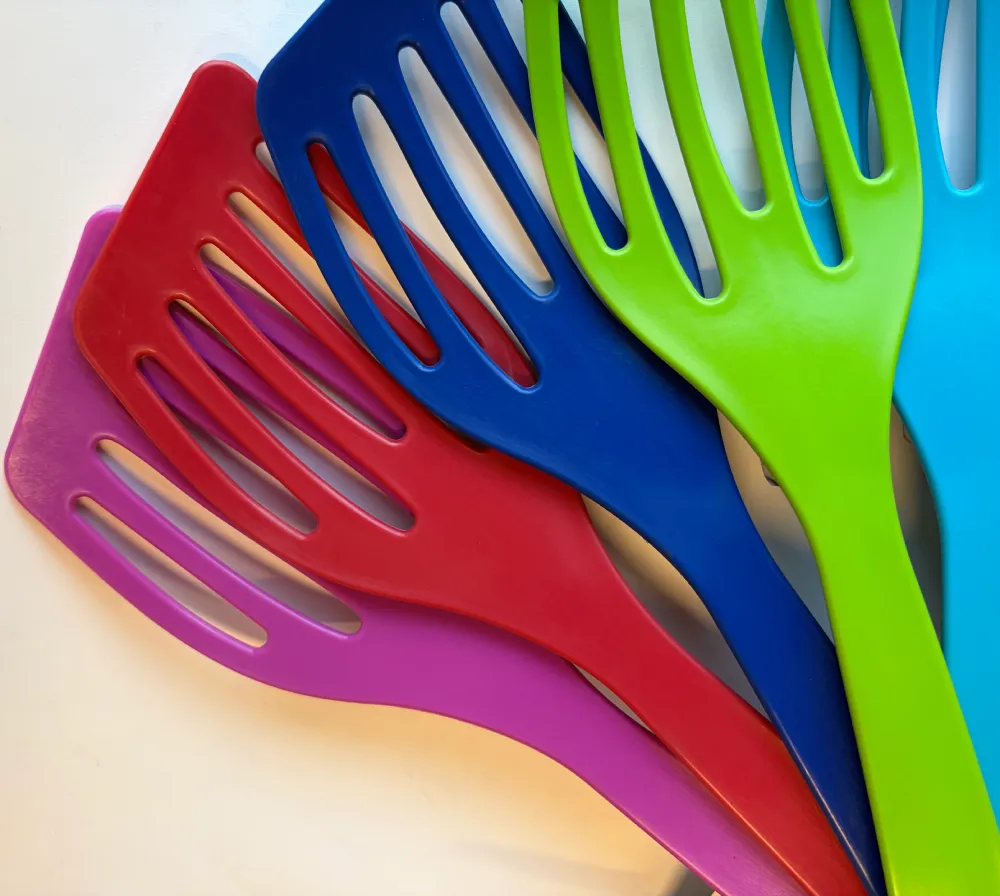
MSF was originally designed for dosing units and micro-moulding machines. It is naturally suited to both small and large parts where colour dispersion and uniformity really matter.
Its most interesting use is COLOUR MATCHING. Different colours are combined and melted immediately at the start of the barrel, and the result is uniform colour right away.
Colour matching is a natural fit for cosmetics and footwear, two sectors where very similar shades often sit side by side.
A handful of base colours can produce an almost endless series of shades. For the customer, this pays off in a big way: far fewer colours need to be kept in stock. Combine just a few masterbatches, such as yellow (cool and warm), orange, red (warm and ruby), green, blue, ultramarine blue, white and black, and the possibilities are limitless.
MSF can be produced on the most widely used polymers (CA, plasticised PVC, PE, PP, PS, SAN, TPU, PA, PC etc.).
MASTERBATCHES FOR SUSTAINABILITY
When it comes to environmental sustainability, La Master Italiana is actively researching eco-friendly products. A few worth highlighting:
- “Special Black Carbon Free”: is a carbon-black-free black masterbatch that can be formulated for virtually any polymer matrix. This product is designed to replace conventional carbon-black-based black colorants, enabling finished plastic parts to remain detectable by the near-infrared (NIR) optical sorting systems used in recycling facilities. By minimizing the absorption of NIR radiation, the material allows automated sorting equipment to accurately identify, classify, and separate plastic waste streams, thereby facilitating efficient and reliable recycling.
- “Fresh Black”: a black masterbatch that reflects part of the sun's radiation instead of absorbing it. The finished part stays cooler as a result.
- Compounds containing by-products from oat, rice and olive processing, as well as Italian wood flour, together with masterbatches designed to colour them.
We also encourage companies to work with us on masterbatches that allow in-house reuse of industrial scrap from their own processes.
FAQ
Frequently asked questions about masterbatches
What types of masterbatch do we offer?
They differ mainly by carrier polymer, intended production use and the kind of pigments they contain.
When it comes to colouring plastics, there are two families of pigment. Organic pigments are bright but less heat-resistant. Inorganic pigments are opaque and stable to light and heat. There are also special-effect masterbatches that use metallic, pearlescent, fluorescent or phosphorescent colourants.
What are special-effect masterbatches?
Masterbatches can do more than add colour. They can also give plastics a special finish.
Metallic and mother-of-pearl effects are both possible. Other options include glitter or sequin effects with shiny particles, photoluminescent effects (they absorb sunlight and release it slowly in the dark), colour-shifting effects (the shade changes with the angle of the light) and fluorescent colours.
Each effect is designed with a specific end use in mind. La Master Italiana Srl specialises in special-effect masterbatches for cosmetics, toys, synthetic fibres and more.
Which sectors do we produce masterbatches for?
We serve every sector, including fashion, footwear, cosmetics, food, toys, medical, packaging, textiles, construction, 3D printing, rotational moulding, agriculture, livestock, defence, diving, boating, automotive, sport, aerospace, components, design, art, eyewear and more.
What type of extruders do we use?
Our machines are co-rotating twin-screw extruders.
The screws are designed to maximise mixing inside the extruder barrel. That's how we achieve highly concentrated masterbatches.
Can masterbatches be used with recycled polymers?
Yes. They work with both virgin and recycled polymers.
Recycled material does bring a strong colour of its own, though. To reach the same shade, we need to develop a dedicated masterbatch.
What are additive masterbatches?
They are specific products that give the finished part both a particular colour and specific properties, such as light resistance, flame retardancy, mechanical strength, antibacterial protection and more.